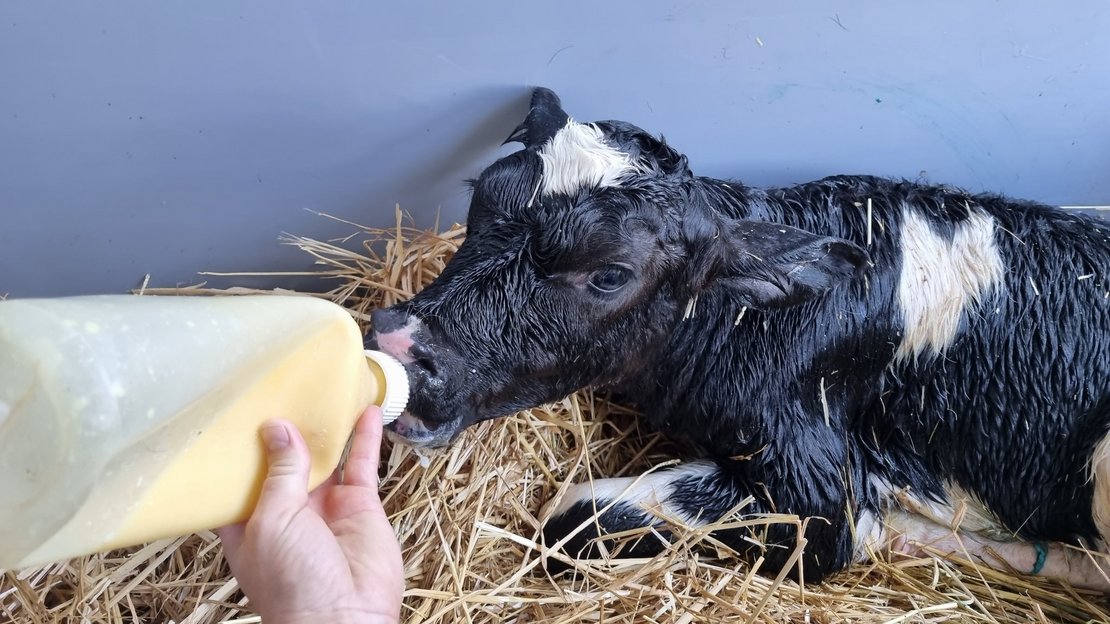
To preserve the nutritional quality of colostrum and ensure successful passive transfer of immunoglobulins to the calf, correct storage, freezing, thawing and heating are essential for effective colostrum management.
Colostrum must be pre-cooled before storage. If warm colostrum is placed in the fridge or freezer, bacteria will still have the opportunity to multiply for a long period of time due to the warm core temperature. To reduce the plate count, pasteurization of colostrum is an option.
Colostrum can be stored in the fridge for up to 24 hours, as bacterial growth does not stop completely in this environment. If it is not fed within 24 hours, it must be frozen as soon as possible. This can be done in small portions of 1 to a maximum of 4 litres. Smaller portions are easier and quicker to cool, defrost and heat.
Colostrum can be thawed and heated to a temperature of approximately 40 °C. Colostrum should be heated au bain-marie using water no hotter than 50 °C to prevent damage to the immunoglobulins, hormones and enzymes. You can use a water bath, a colostrum machine such as the ColoQuick, a milk heater or a sous-vide stick.
Key points to remember:
• Plate count is one of the most important indicators of colostrum quality.
• Pasteurization helps reduce bacterial contamination.
• Always use clean and hygienic storage materials.
• Store colostrum in small portions.
• Pre-cool colostrum before storage.
• Store colostrum for less than 24 hours in the fridge and for less than 8 months in the freezer.
• Thaw and heat colostrum in water no hotter than 50 °C.